Geopoetics: Changing Nature of Threatened Worlds
Date:2023/12/02(Sat)~2024/03/10(Sun)
Time: Tue.-Fri. 09:00~17:00, Sat.-Sun. 09:00~18:00
Locations:Gallery 102, 202, NTMoFA
Curators:Patrick Flores 、Kim Seong-Youn 、Hsieh Pei-Chun
About the exhibition
In his poem I’m Not Gonna Talk to You about It, poet Wu Cheng uses three negative sentences to unlock the political potential of the following three things: poetry, life experience, and modern society. He reminds us that we’ll get closer to poetics as soon as we cease our empty rhetoric and interpretations in a cramped room, start to approach natural creatures and open fields of production, and try to extend the space-time for objects and humans through our senses.
Titled “Geopoetics: Changing Nature of Threatened Worlds,” this exhibition owes its inspiration to the idea that nothing can be more optimal than poetry to be the rendezvous for the private and the public as well as for introspection and extroversion. This exhibition not only advocates a poetic survey into the material conditions of East and Southeast Asia in postwar geopolitics, but also unravels contemporary art’s critical perspective withinin the landscpae of anti-poetics.On the basis of geopolitics, the term “geopoetics” further accentuates “form-making,” i.e., the shared similarity between geospatial distribution and poetic formation, so as to extend our concern over East and Southeast Asia in terms of international politico-economic issues like nation, region, and the center-periphery structure.
As we employ poetics to imply the likeness between world-making and form-making, we’ll discover that artistic creation bears more than a passing resemblance to geospatial reshuffle, and that natural / artificial landscapes can be analogized to aesthetic propositions. In this sense, poetic practice seems to emancipate Asia from unduly dogmatic geopolitics and ideology, which ergo offers alternative political potential for artistic creation.

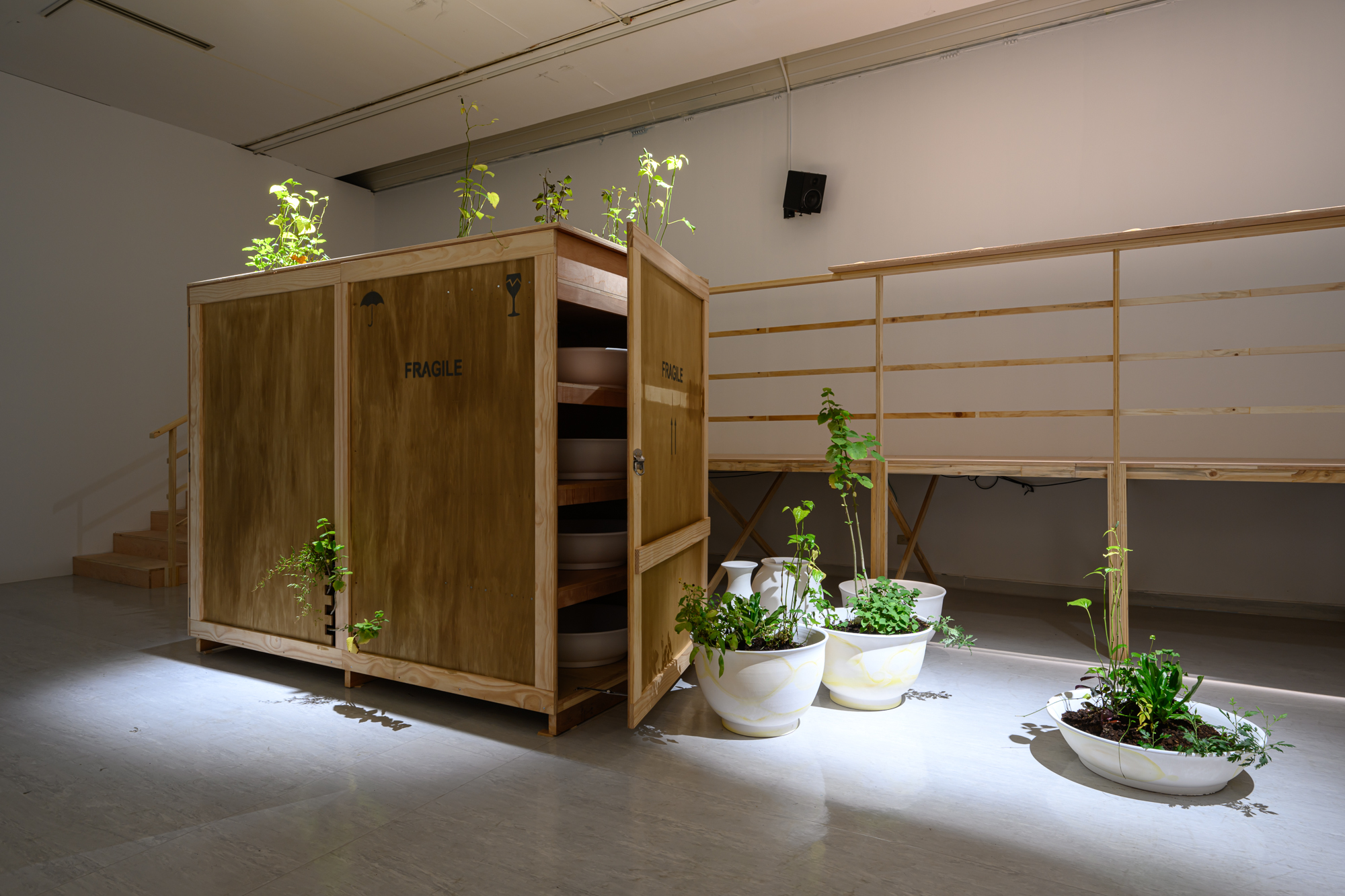
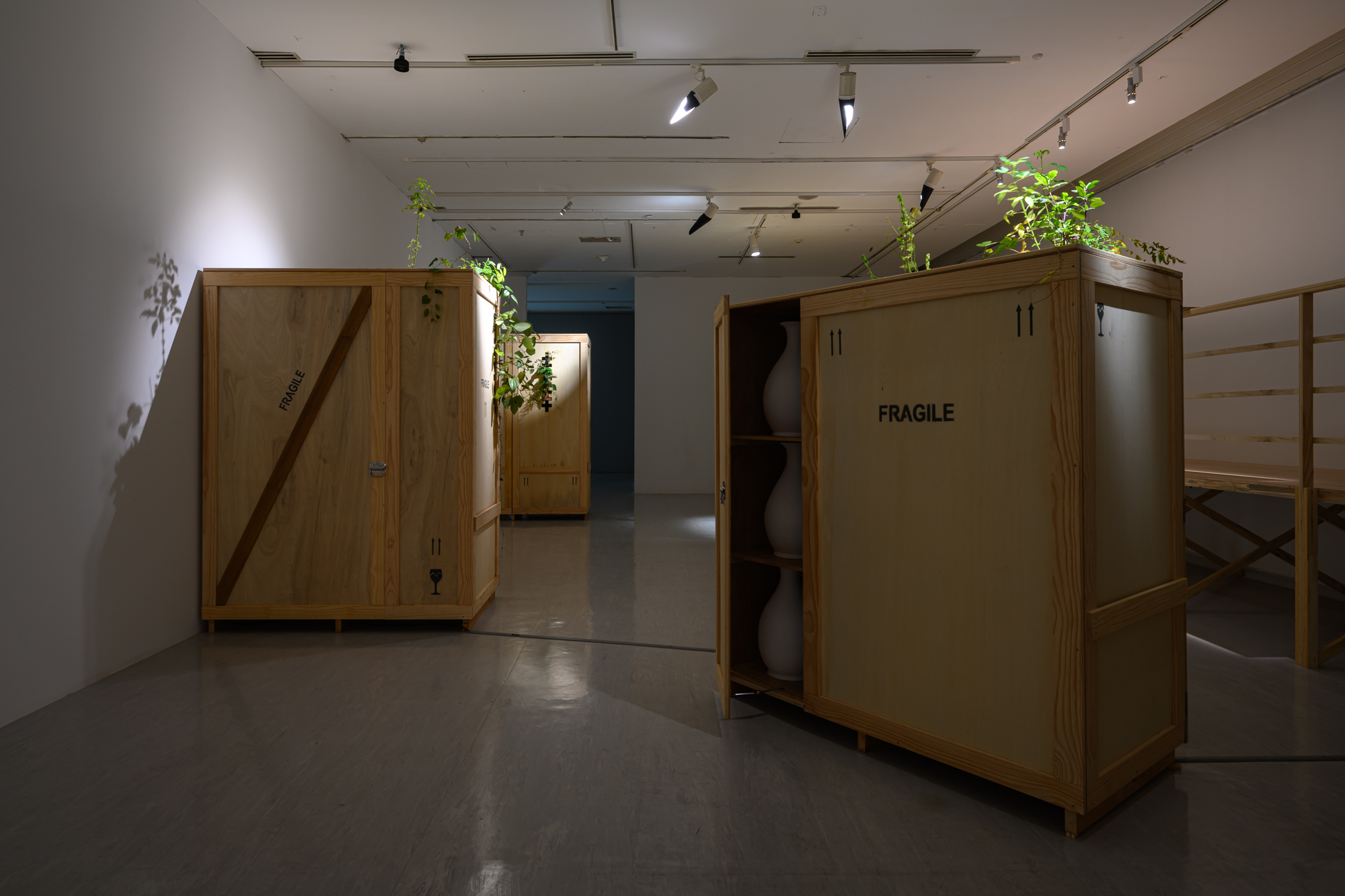
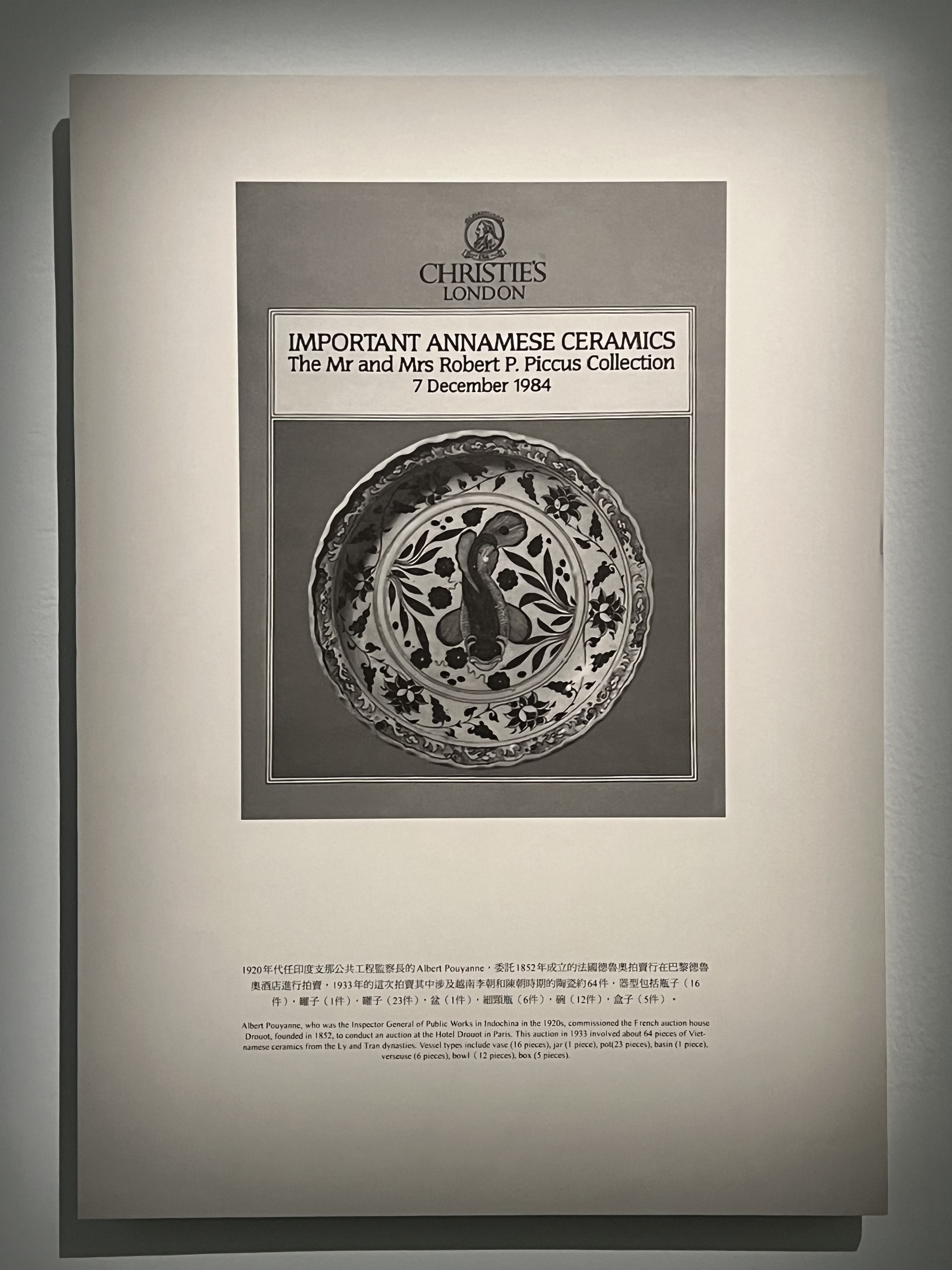
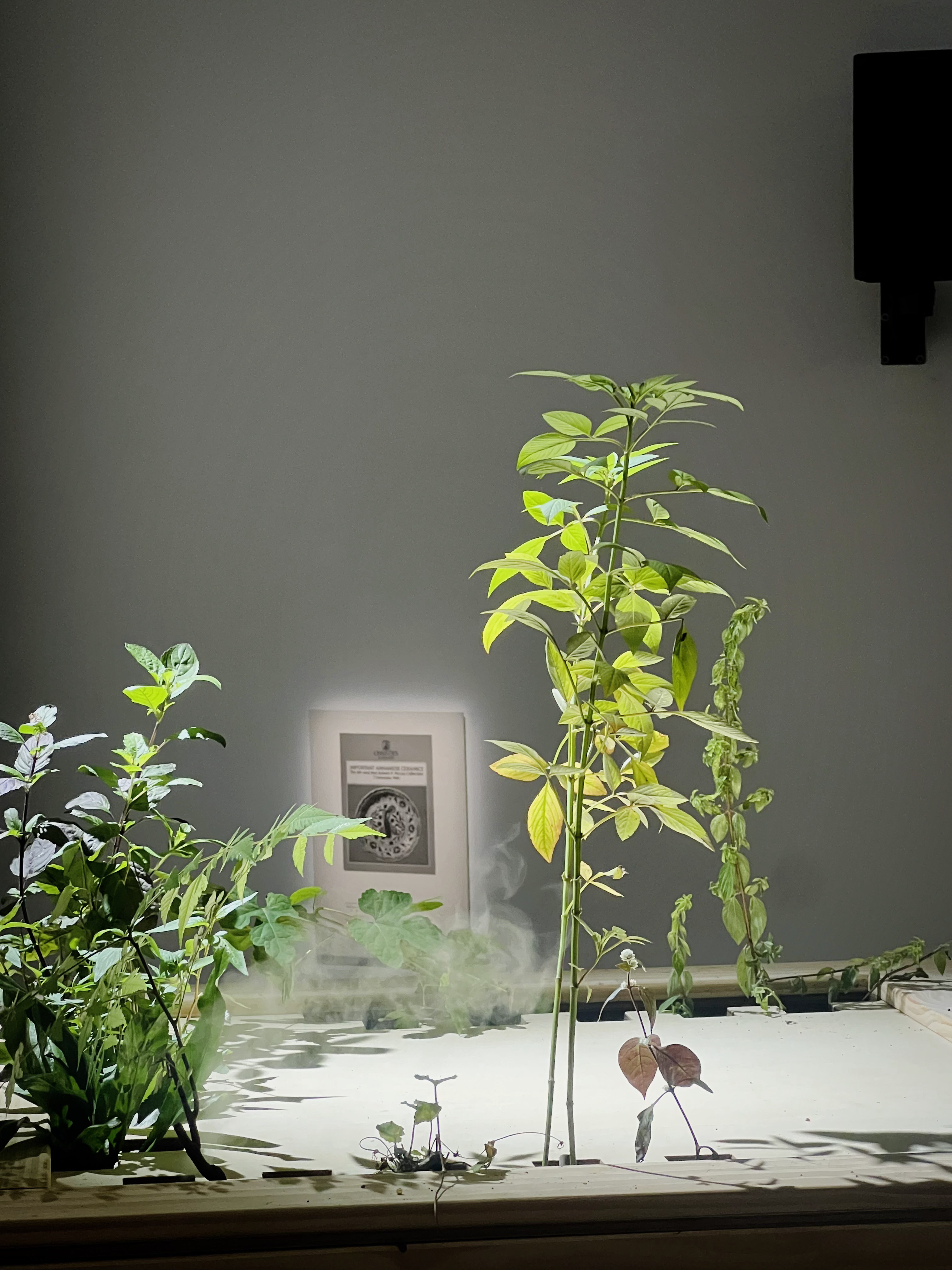
Similarly taking tactile and sensory memory as a point of departure for reflecting on the histories of East Asian diaspora,Kuo Yu Ping, in her reconstructed work My Stomach Still Has No Lunch, My Neck Is Searching for Sunlight, My Mind Seeks Love, My Soul Holds Unease, and in My Heart There Is a Sharp Pain, constructs a quasi archaeological site as a means of speculating toward the future. By juxtaposing the collection and circulation history of nineteenth century Vietnamese ceramics with the contemporary displacement of new immigrants in Taiwan, the artist builds an archaeological environment that occupies and reconfigures the museum space. In doing so, the conventional display function of artworks or artifacts is transformed here into a site of bonding, a meeting point where affective relations may emerge.
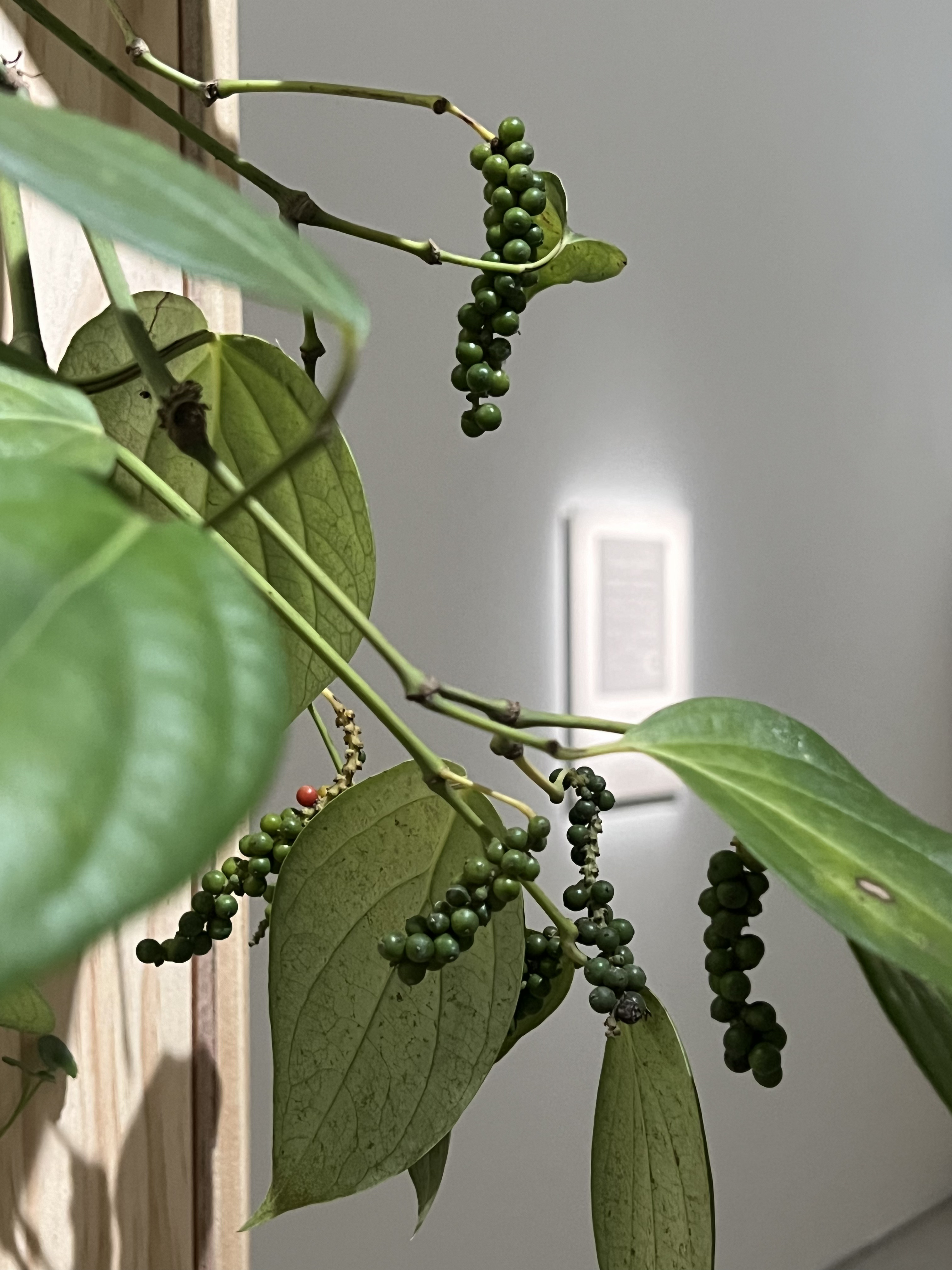
Within this fabricated ruin, she carefully plants mint, perilla, arrow leaf orange, Vietnamese coriander, and other aromatic herbs. Their fresh herbal scents linger among the hand formed imitation Vietnamese ceramics shaped by the artist herself. Upon these suggestions of smell and touch, she further extends the sensory field by introducing auditory and visual stimuli through a recorded dialogue with her Taiwanese Vietnamese friend Chiu-Liu Chen. The dislocated artifacts and layered sensory experiences within this “imitated” site all arise from the artist’s own perceptual memory: an old ceramic bowl unexpectedly found while swimming along the China Vietnam coastline, Qiuliu’s soft speaking voice, or the scent of homeland herbs growing on her balcony.
These minute sensory nodes, moving from intimacy toward the public, and from introspection toward outward encounter, are opened to viewers through the form of the site itself, inviting them to sense how new immigrants, through repeated movements from one place to another, continuously negotiate loss and gain through acts of reinvention, and undergo a becoming in which pain and joy remain inseparable.
展覽簡介:
詩人吳晟在《我不和你談論》一詩中以三個否定句開啟詩、每日生活經驗與現代社會的政治潛能。詩人提醒我們,當暫停斗室中的空口談論、詮釋,而開始臨近田野萬物與生產場址,嘗試以感官擴延物與人的時態與空間時,我們同時也更接近了詩學。本展覽「地緣詩學:瀕危世界的多變特質」,以詩作為再理想不過、私人與公眾、內省與外揚的會面點為靈感,提倡以一場詩性的踏查,重新丈量東亞與東南亞自二戰後地緣政治的物質情狀,並爬梳當代藝術的批判性視野如何浮現於反詩學的地景之中。奠基於地緣政治的概念,「地緣詩性」一詞進一步強調地理空間分佈與詩學形塑的相似性——造型(form-making),以擴延我們對東亞與東南亞國族、區域、中心與邊陲等國際政經關係下的關懷。當我們以詩學暗示製造世界地域(world-making)與造型的相似性時,我們將會發現藝術創造仿若重組空間地理,而自然/人造的地形景觀一如美學主張(aesthetic proposition)。而過於武斷的亞洲地緣政經情狀與意識形態,似乎也在詩學的實踐下解套,進而讓藝術創造擁有另類的政治潛能。
同樣地視觸覺等感官記憶為討論東亞離散史的起點,